Brief Description of HDD Design and Operation
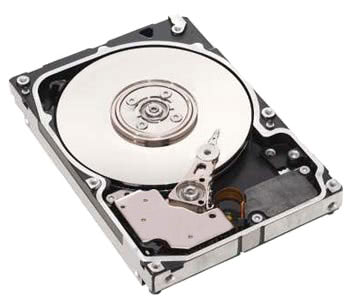
Hard disk drives (HDDs) are conventionally composed of an airtight enclosure and a printed circuit board. The airtight block is filled by clean, dust-free air under atmospheric pressure, and contains all mechanical components. The HDD kinematics consists of one or more magnetic platters firmly attached to the motor spindle, and a positioning system of magnetic heads. The magnetic head is located above one surface of a rotating magnetic disk and reads and writes data on the surface of the magnetic disks rotating at speeds up to 15,000 revolutions per minute. Heads are mounted on actuator arms and are moved by the positioning system between the center and the edge of the platter. The exact positioning of magnetic heads is carried out according to servo information recorded on the disk. By reading it, the positioning system determines the current needed to flow through the coil of the electromagnetic actuator to keep the magnetic head over the desired track.
At power-on, the HDD processor carries out electronics testing, and then issues a command to start the spindle motor. Once a critical rotational speed is reached, the air dragged along by the spinning platters generates enough lift to overcome the preload of the heads and raise them to a height of less than one micron above the platter surfaces. From this moment until the rotation speed drops below the critical level, the heads 'float' on an air cushion without touching the disk surfaces. After the drive achieves a speed close to nominal, the heads are moved out of their parking zone, and the search for servo marks begins to precisely stabilize the rotation speed. Then reading of microcode and another service information from a magnetic surface is carried out. In the end, of initialization, the testing of a system of positioning by searching for servo marks of tracks is conducted, and if it passes successfully, the HDD signals that it is ready to operate. To increase the reliability of information storage, the firmware of hard drives monitors technological parameters (S.M.A.R.T.) accessible for reading and analysis by of the program that warns the user about imminent failures.